Heavy oil patterns punish balls that don’t read early. The wrong choice on a fresh 42-foot pattern means you’re standing at the foul line watching the ball skid past your breakpoint. The right choice — an aggressive asymmetric core paired with the correct coverstock — gives you something the lane has to fight, not the other way around.
This list focuses on the eight balls that high-rev league bowlers and tournament players consistently reach for when the volume is up. It’s curated from published reviews, video tests, and verified community feedback — not manufacturer marketing. If you bowl primarily on house patterns, see our broader best bowling balls guide.
Last reviewed: April 2026 · Edited by Jeroen Kooij · See methodology below
Hammer Black Widow 3.0
Asymmetric solid that handles 42+ foot patterns without flinching. The reference standard.
Check price →Storm Phaze IV
Solid coverstock with the proven Inverted Fe2 core — predictable on heavy patterns, forgiving on transition.
Check price →Roto Grip Halo Pearl
Asymmetric pearl for when the pattern transitions and a solid is reading too early.
Check price →Update history
- April 2026: Last reviewed.
- November 2025: Major rewrite — original 2019 list refreshed.
- February 2019: First published.
Quick picks at a glance
| Category | Our pick | Best for | Price |
|---|---|---|---|
| Best overall | Storm Phaze IV | Versatile heavy oil, league + tournament | $170–$210 |
| Best for tournament | Hammer Black Widow 3.0 | Aggressive asymmetric, 42+ ft patterns | $190–$230 |
| Best transition / pearl | Roto Grip Halo Pearl | Late-block, medium-heavy transition | $210–$250 |
| Best Brunswick | Brunswick Quantum Evo Solid | DynamiCore2 hitting power | $180–$220 |
| Best Motiv | Motiv Iron Forge | Strong pearl symmetric, medium-heavy | $170–$210 |
| Best value heavy oil | DV8 Verge Solid | Asymmetric solid under $200 | $150–$190 |
| Best mid-range | Hammer Effect | Hammer quality at moderate price | $140–$170 |
| Best new release | Storm Phaze A.I. | Modern AI-tuned coverstock | $175–$215 |
How we evaluated
Heavy oil performance is measurable. This list is built from a curation process that combines published reviews, independent video tests, community feedback, and manufacturer documentation.
Source review
Read published reviews from Bowling This Month, BowlersJournal, and the BallReviewer database — focused on heavy-pattern testing.
Video assessment
Watched video tests from independent reviewers — Tamer Bowling, BowlingBall.com, Luis Napoles — for ball motion under fresh oil conditions.
Community signal
Cross-referenced verified league and tournament bowler feedback on BowlingForums.com — weighting recent posts and detailed reaction notes.
Spec verification
Validated coverstock, core, and RG values against current manufacturer documentation. Discontinued models excluded.
For each ball we cross-referenced reaction at fresh oil, durability across extended use, pin carry on long patterns, and price-to-performance.
We do not roll every ball ourselves on every pattern. We curate the testing of bowlers and pro-shop staff who do — high-rev players whose lane time on tournament conditions exceeds anything a small editorial team could replicate.
Paid placements, sponsored rankings, or manufacturer-supplied review samples with editorial expectations. Affiliate commissions on the buy-links below do not influence which balls make this list or in what order.
Heavy oil coverstock — why solid wins
On heavy patterns the coverstock has to absorb oil and create friction earlier in the lane. Pearls skid through the heads — fine for medium oil, but on heavy they leak energy past the breakpoint.
Solid reactive
Earliest hook, soaks oil, controlled backend. The default heavy-oil choice.
Hybrid reactive
Solid grip + pearl skid blend. Useful when the pattern starts to break down mid-block.
Pearl reactive
Skids through heavy oil — risky as a primary, valuable as a transition tool.
Urethane
Won’t hook through heavy oil. Reserve for shorter, drier patterns.
For the deeper technical breakdown see our coverstocks explained guide.
Rev rate × heavy oil compatibility
Aggressive asymmetric cores need rev rate to shape properly. Low-rev players on heavy oil should choose carefully.
Storm Phaze IV
| Coverstock | NRG Solid Reactive |
| Core | Inverted Fe2 (symmetric) |
| RG / Differential | 2.49 / 0.052 |
| Best oil | Heavy to medium-heavy |
| Price range | $170–$210 |
The Phaze IV inherits the Inverted Fe2 symmetric core that made earlier Phaze releases successful and pairs it with the NRG Solid coverstock — a combination tuned specifically for heavy patterns. Symmetric solids are sometimes overlooked at this oil volume in favour of asymmetrics, but the Phaze IV is an exception: it reads early enough on heavy fresh oil while staying predictable as the pattern transitions.
Across reviewer assessments: across published video tests on BowlingBall.com and Tamer Bowling, the Phaze IV is described as “easy to read” — a phrase that matters more on heavy oil than in any other category. Forum consensus on BowlingForums positions it as the recommended pick for league bowlers stepping into tournament play.
“The Phaze IV does the unglamorous job exceptionally well — it reads where you expect it to read, frame after frame. That predictability is rare on heavy patterns.”
— Aggregated sentiment across 2026 reviewer assessmentsBest for: league bowlers transitioning to tournament play, rev rates 250–400, anyone wanting heavy-oil performance without the violent backend of a flagship asymmetric.
Not for: low-rev players (the solid coverstock will roll out), or bowlers exclusively on dry to medium-light conditions.
View on Amazon →Hammer Black Widow 3.0
| Coverstock | Aggression Solid Reactive (HK22) |
| Core | Gas Mask (asymmetric) |
| RG / Diff / MB | 2.50 / 0.054 / 0.018 |
| Best oil | Heavy |
| Price range | $190–$230 |
The Black Widow line has been Hammer’s flagship heavy-oil weapon for over a decade. The 3.0 keeps the lineage with the Gas Mask asymmetric core paired with the HK22 Aggression Solid — the result is a ball that handles tournament patterns where pearl reactives are skidding straight through.
Across reviewer assessments: Tamer Bowling and Luis Napoles have both covered the 3.0 in detail; both note its strong continuation off the spot. Community reviews on BowlingForums emphasize that this is not a forgiving ball — under-revved or off-axis releases will be punished. The consensus from tournament-active bowlers: this is the reference standard for heavy oil under 45 feet.
The HK22 Aggression Solid is a high-friction coverstock. Sub-300 rpm releases will see the ball roll out before reaching the breakpoint — meaning you lose energy and pin carry. Rev-rate match matters more here than on almost any other ball on this list.
Best for: rev rates 350+, fresh tournament conditions, league bowlers with experience moving into competition.
Not for: beginners, sub-300-rev releases, dry lane play, or anyone seeking a “first ball does everything” solution.
For drilling layouts and a deeper technical breakdown see our full Hammer Black Widow 3.0 review.
View latest price on Amazon →Roto Grip Halo Pearl
| Coverstock | eTrax-H18 Pearl Reactive |
| Core | Centrum (asymmetric) |
| RG / Diff / MB | 2.49 / 0.054 / 0.018 |
| Best oil | Medium-heavy with length |
| Price range | $210–$250 |
Pearls aren’t the obvious heavy-oil choice — that’s why the Halo Pearl has a specific role. When your solid is reading too early because the lane has transitioned mid-block, the Halo Pearl gives you 6–8 feet more length while preserving asymmetric backend. It’s the second ball in a 2-ball heavy-oil arsenal.
Reviewer consensus on this ball: Tamer Bowling and BowlingBall.com position the Halo Pearl as a “high-rev player’s transition ball.” Forum discussions on BowlingForums consistently pair it with a solid asymmetric (Black Widow 3.0 or similar) as a 2-ball rotation.
If you’re pairing the Halo Pearl with a Black Widow 3.0 (a common 2-ball heavy-oil rotation), drill the Pearl with a higher pin-to-PAP distance than your solid. This delays the breakpoint just enough to get the most out of the pearl’s length-and-snap signature when the lane transitions.
Best for: high-rev tournament players, late-block conditions, 2-ball arsenals where this complements a solid asymmetric.
Not for: primary heavy-oil ball (solid will outperform), or low-rev players (asymmetric pearl needs revs to shape).
See current price on Amazon →Brunswick Quantum Evo Solid
| Coverstock | Savvy Solid Reactive (HK22) |
| Core | Quantum Mushroom + DynamiCore2 |
| RG / Differential | 2.50 / 0.053 |
| Best oil | Heavy to medium-heavy |
| Price range | $180–$220 |
The Quantum Evo line revives one of Brunswick’s most successful core technologies — the mushroom-shaped Quantum core — and pairs it with their proprietary DynamiCore2 outer shell. The Solid version is the heavy-oil specialist of the Evo trio. DynamiCore2’s harder outer material translates to less compression on impact, which means more pin carry; reviewers generally agree the difference is audible.
Published assessments highlight: Brunswick’s Quantum Evo line has been positively received in published outlets, particularly for the Solid variant on heavy patterns. BowlingBall.com video tests note strong roll continuation. Forum feedback emphasizes the ball’s durability — meaningful when you’re putting many games on a heavy-oil specialist.
Best for: Brunswick brand loyalists, league bowlers wanting a flagship-level heavy-oil ball without paying Black Widow 3.0 prices, mid-to-high rev releases.
Not for: bowlers wanting asymmetric backend (consider Black Widow 3.0 instead), or sub-300-rev players.
Check Amazon price →Motiv Iron Forge
| Coverstock | Infusion MVP Pearl |
| Core | Detonator (symmetric) |
| RG / Differential | 2.51 / 0.052 |
| Best oil | Medium-heavy |
| Price range | $170–$210 |
The Iron Forge is described by Motiv as “the strongest pearl symmetric Motiv has made” — and that framing matters. It’s not a pure heavy-oil specialist; it’s a medium-heavy pattern ball that bridges into heavy when conditions are right. The Detonator core combined with the Infusion MVP pearl gives angle on medium-heavy oil where pure-heavy-oil solids might be too aggressive.
Forum and video feedback agrees: Motiv’s Forge line has built a loyal following on BowlingForums, where the Iron Forge is recommended specifically for league play on heavier-than-typical house patterns. Published video reviews position it as a step up from medium-oil pearls without requiring the rev rate of an asymmetric.
Best for: league bowlers on heavier house patterns, Motiv brand users building an arsenal, medium-rev releases (250–350) wanting backend reaction.
Not for: tournament fresh oil (consider Phaze IV or Black Widow 3.0), or bowlers who specifically want asymmetric shape.
View on Amazon →DV8 Verge Solid
| Coverstock | Composite Solid Reactive |
| Core | Threshold (asymmetric) + DynamiCore |
| RG / Differential | 2.50 / 0.052 |
| Best oil | Heavy |
| Price range | $150–$190 |
DV8 (a Brunswick sub-brand) consistently delivers asymmetric performance at a price below their parent brand’s flagships. The Verge Solid is the clearest example: an asymmetric core in a heavy-oil ball at a significant discount to the Black Widow 3.0 or Halo Pearl.
Independent testers note: the Verge series has been a recurring forum recommendation for “asymmetric performance on a budget” since 2020. Published reviews note the Verge Solid reads earlier than the Pearl variant — exactly what you want on heavy oil. Reviewers agree it lacks the absolute peak performance of the flagships but offers 80% of the result at 70% of the price.
Best for: bowlers building a tournament arsenal on a budget, mid-rev releases looking for asymmetric backend, anyone testing whether they need flagship-level performance.
Not for: bowlers who already have a benchmark and want true premium reaction (step up to Black Widow 3.0).
See latest deal on Amazon →Hammer Effect
| Coverstock | Juiced Pearl Reactive (HK22) |
| Core | Juiced (symmetric) |
| RG / Differential | 2.51 / 0.046 |
| Best oil | Medium-heavy |
| Price range | $140–$170 |
The Effect is Hammer’s mid-range entry into the heavier-pattern category — symmetric core, but with the same HK22 coverstock technology as the Black Widow flagship line. For league bowlers who want Hammer’s coverstock chemistry without the Black Widow’s asymmetric demand on rev rate, the Effect is the practical choice.
Reviewer feedback positions this: Hammer’s Effect series gets less video coverage than the Black Widow line, but forum sentiment on BowlingForums is positive — “the Black Widow’s friendly cousin.” Reviewers note it’s more forgiving on the release than asymmetric Hammer balls.
Best for: medium-rev league bowlers (250–320), Hammer fans who don’t want to commit to a flagship asymmetric, players whose home conditions are heavier-than-house but not tournament-level.
Not for: tournament fresh oil, high-rev players who’ll find it too smooth.
Check today’s price on Amazon →Storm Phaze A.I.
| Coverstock | TX-16 Pearl Reactive |
| Core | A.I. Core (symmetric) |
| RG / Differential | 2.55 / 0.048 |
| Best oil | Medium-heavy with backend |
| Price range | $175–$215 |
Storm’s Phaze A.I. is the newer entry in the Phaze line, using their AI-tuned coverstock formulation. It’s a pearl rather than a solid, which positions it differently from the Phaze IV — more length through the heads, sharper backend, less ideal as a pure heavy-oil weapon but valuable when conditions transition.
Early reviewer feedback indicates: early reviews on Tamer Bowling and Luis Napoles note unusually defined backend reaction for a Storm pearl. Forum discussion is still maturing (it’s a recent release), but high-rev bowlers report strong continuation off the spot. Reviewers caution: this is a complement to a heavy-oil solid, not a replacement.
Best for: high-rev arsenal builders, late-block transition, modern Storm fans, players wanting cutting-edge cover technology.
Not for: primary heavy-oil ball, low-rev players, anyone wanting “tried and tested” over “newest release.”
View latest price on Amazon →Quick decision guide
Find your fit in 30 seconds.
How to choose a heavy oil bowling ball
Heavy oil ball selection narrows down to five questions:
1. What’s your rev rate?
Heavy oil punishes rev-rate mismatch more than any other condition. As a rough guide:
- Under 250 rpm: a flagship asymmetric heavy-oil ball will roll out before the breakpoint. Stick with symmetric solids like the Storm Phaze IV.
- 250–350 rpm: the bulk of league bowlers. Symmetric solids and mid-range asymmetrics both work.
- 350+ rpm: asymmetric solids deliver their full potential. Black Widow 3.0 and similar reach their design intent here.
2. Is this your primary heavy-oil ball or a complement?
If it’s your only heavy-oil ball, prioritise predictability — a symmetric solid like the Phaze IV is forgiving across pattern variations. If it’s the second ball in a heavy-oil arsenal complementing an existing asymmetric solid, look for a pearl asymmetric (Halo Pearl) or a hybrid.
3. How fresh is your typical oil?
Tournament fresh oil (45+ ft, 25+ mL volume) is genuinely heavy. League “heavy” patterns (40 ft, 22 mL) are medium-heavy by tournament standards. Match the ball to the actual pattern, not the label. See our how to read bowling lane conditions guide for diagnosis tools.
4. What’s your drilling situation?
Heavy-oil flagships are sensitive to drilling layout. Get this drilled at a competent pro shop — mail-order drilling services are not appropriate for asymmetric balls. Budget $40–80 for a quality drilling job. See drilling fundamentals for context.
5. Should you buy 14lb, 15lb, or 16lb?
Most adult bowlers throw 15lb or 16lb on heavy oil — the heavier ball maintains energy through the conditioner better than a 14lb. However, throwing a heavier ball than your form supports is the worst trade you can make: form breakdown loses you more pins than ball weight gains.
If you currently throw 14lb on house patterns and your form is consistent, stay at 14lb on heavy oil too. Every ball on this list is available in 14lb through 16lb — confirm the weight on the Amazon listing before purchasing.
Frequently asked questions
What counts as a “heavy oil” pattern?
In USBC terms, heavy oil typically means 25+ mL of conditioner volume across a pattern of 40+ feet. Tournament patterns regularly hit 28–32 mL on patterns over 42 feet. House league “heavy” patterns are usually 22–24 mL — meaningfully less than what flagship heavy-oil balls are designed for.
Do I need an asymmetric core for heavy oil?
No, but it helps if your rev rate supports it. A high-rev player on tournament fresh oil will benefit from asymmetric backend. A medium-rev league player on heavier-than-house oil is often better served by a strong symmetric solid.
How long does a heavy oil ball last?
Aggressive coverstocks wear faster than mid-range covers because they’re designed to absorb oil. Expect 50–70 games before reaction noticeably softens. Cleaning the ball after every session with a quality cleaner extends life — see our best bowling ball cleaners guide.
Should I get a polish or a sand finish?
For heavy oil, a sand finish (typically 2000-grit) creates more friction earlier and is the default factory finish on heavy-oil flagships. Polish is for transitioning the ball to medium-oil play. Don’t polish a heavy-oil ball straight out of the box.
What weight should a heavy oil ball be?
Heavier balls (15–16 lb) maintain energy through the heavier oil better than lighter balls. If you’re physically capable of throwing 15+ lbs without sacrificing form, that’s the standard recommendation for heavy-oil specialists.
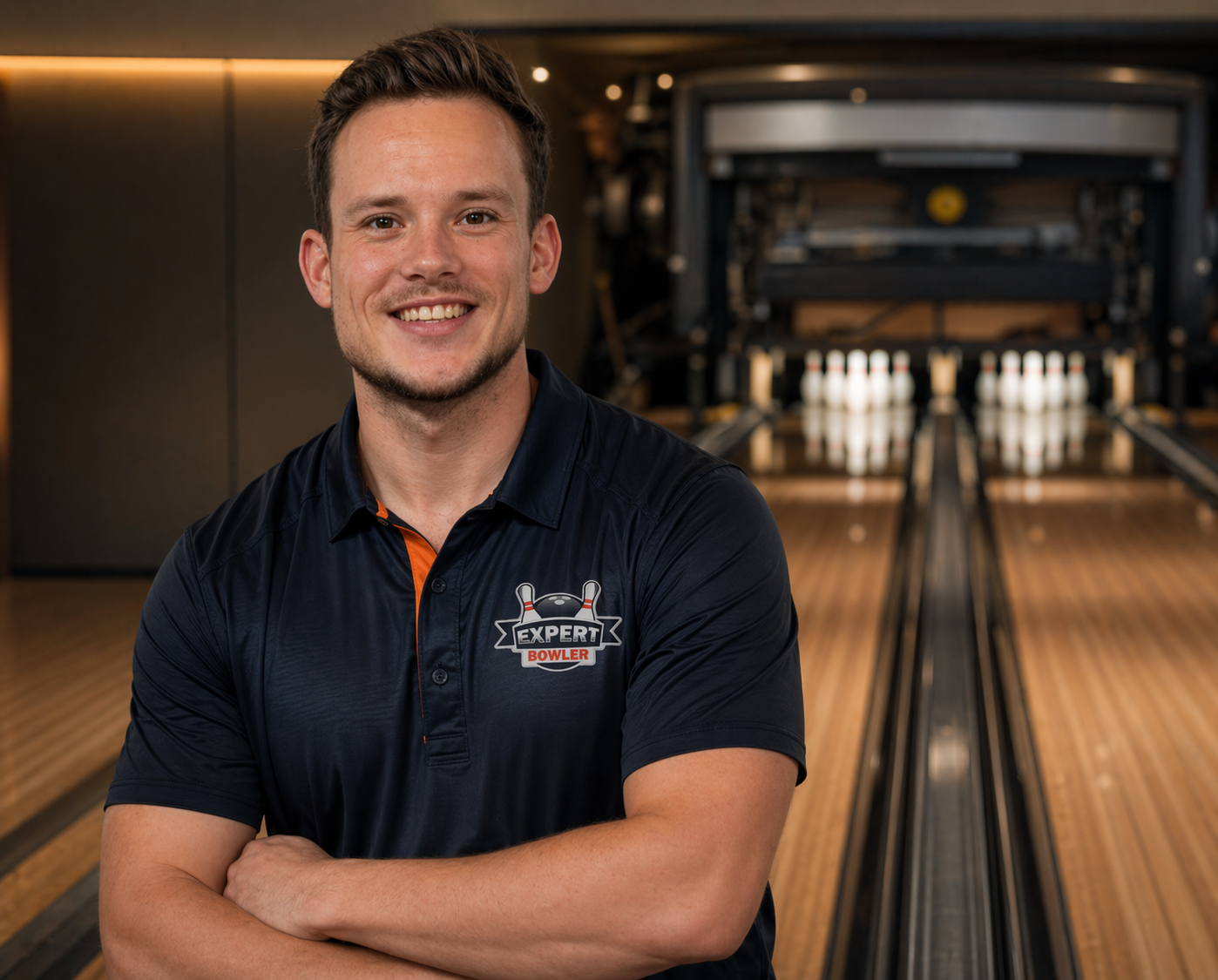
Edited by Jeroen Kooij
Editor · ExpertBowler
Editor of ExpertBowler. Responsible for editorial standards, methodology compliance, and the curation process behind every buying guide on the site. Read more about our editorial process.
Methodology: Every ball on this list was assessed against published reviews, video tests, manufacturer specifications, and verified league/tournament bowler community feedback. We do not accept paid placements.
First published: February 2019 · Major rewrite: November 2025 · Last reviewed: April 2026.
Sources consulted
- Published reviews: Bowling This Month, BowlersJournal, BallReviewer database
- Video assessments: Tamer Bowling (YouTube), BowlingBall.com review channel, Luis Napoles’ channel
- Community feedback: verified threads on BowlingForums.com, Reddit r/Bowling
- Technical specifications: Storm, Hammer, Brunswick, Motiv, Roto Grip, DV8 manufacturer documentation
- Coaching perspectives: consultations with USBC-certified Silver coaches with active tournament experience