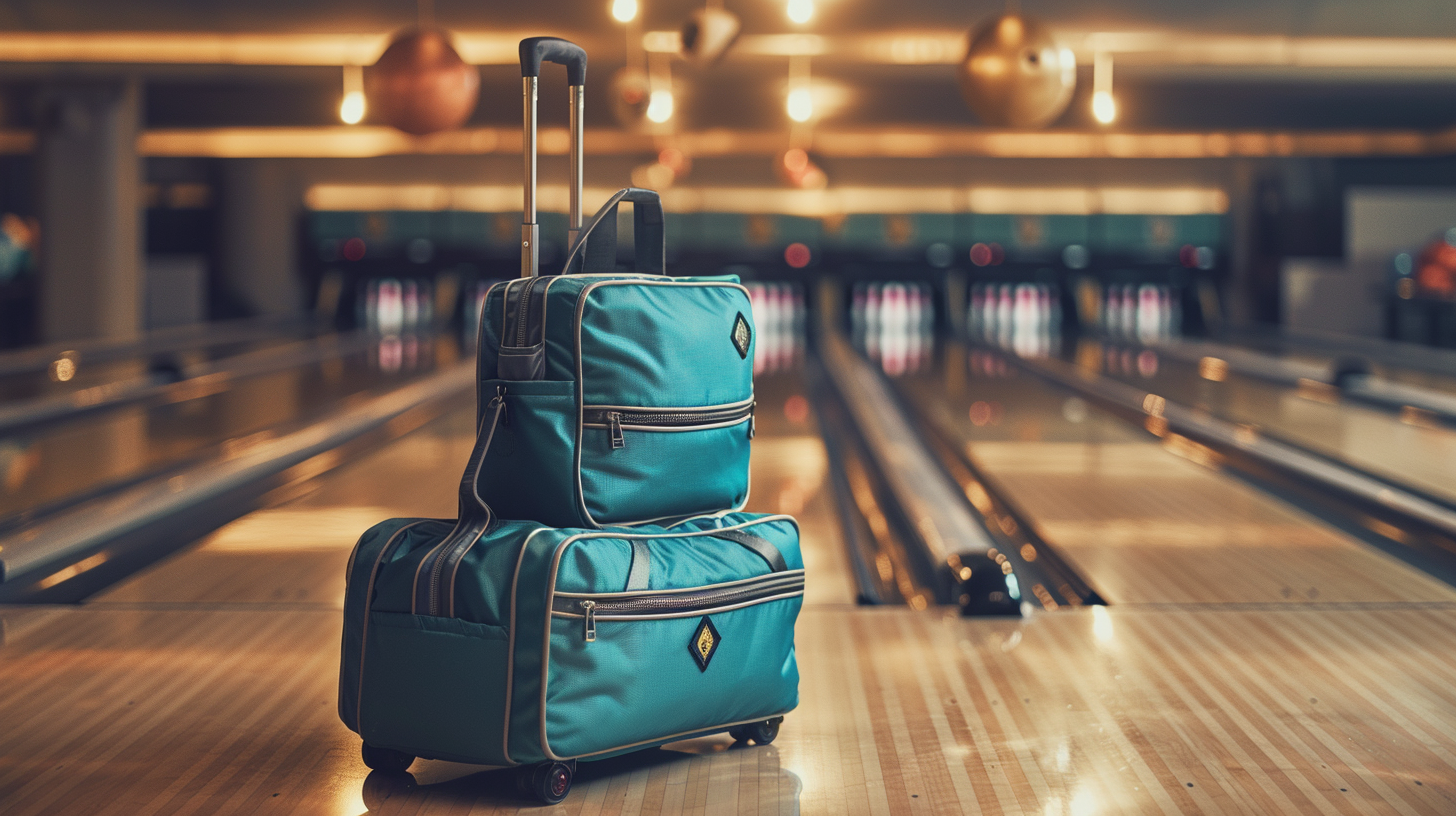
Bowling Bags
Spec-backed reviews and buying guides for tote, roller, and tournament bowling bags — capacity, materials, wheels, and durability decoded for every bowler need.
Four bowling bags we'd recommend right now.
Picked for distinct bowler situations — not by commission rate. Specs, watch-outs, and full reviews behind each.
Storm Tournament 3-Ball Roller
The benchmark tournament roller. Heavy-duty 600D ballistic shell, oversized skate wheels, and the most-recommended bag for serious league and tournament bowlers in 2026.
- Capacity: 3 balls + shoes
- Material: 600D ballistic nylon
- Wheels: 5" oversized skate
- Handle: Telescoping aluminum
Brunswick Quad Tote
Compact single-ball tote with a padded shoe pocket and reinforced bottom. The cleanest single-ball carry option for league bowlers who want minimal bulk.
- Capacity: 1 ball + shoes (size 13)
- Material: 600D polyester
- Reinforced PVC bottom
- Padded shoulder strap
Hammer Premium Double Tote Roller
The best balance of capacity and portability. Two-ball stack with skate wheels, separate shoe compartment, and accessory pockets that actually fit your gear.
- Capacity: 2 balls + shoes (size 14)
- Material: 1680D ballistic
- Wheels: 5" inline skate
- Telescoping locking handle
KR Strikeforce Lane #1 Triple Tote Roller
Built for tournament travelers. Reinforced hardware, padded ball compartments, oversized accessory pocket, and wheels that survive airport baggage handling.
- Capacity: 3 balls + shoes (size 15)
- Material: 1680D ballistic
- Wheels: 6" oversized
- Reinforced hardware
Reviews built on sources, not sponsorship.
Every bag reviewed on ExpertBowler is researched against manufacturer spec sheets (material denier, wheel type, capacity), USBC equipment research, and pro shop feedback. We don't accept payment for higher rankings — affiliate links exist, but they never determine which bag wins which category. Read our editorial standards.
Find the right bowling bag.
Six routes into our coverage — by capacity, use case, or brand. Pick the one that matches what you're solving right now.
Best Bowling Bags 2026
Six expert picks matched to bowler situation, with capacity reads and watch-outs for each.
Open guide →Best 1-Ball Bowling Bags
Compact totes for league bowlers carrying a single ball plus shoes and basics.
Open guide →Best 2-Ball Bowling Bags
Two-ball rollers and totes for league bowlers building a small arsenal.
Open guide →Best 3-Ball Bowling Bags
Three-ball tournament rollers for league regulars and competitive bowlers.
Open guide →Best Bowling Bags for Travel
Travel-tested rollers built to survive airline baggage handling and cross-country trips.
Open guide →Best Bowling Bag Brands 2026
Storm, Hammer, Brunswick, KR Strikeforce, Roto Grip — what each brand does best for carry gear.
Open guide →Recently reviewed bowling bags.
Fresh bag reads — capacity considered, materials inspected, real-world durability documented.
Best Bowling Bag Brands of 2026
Best Bowling Travel Bags
Best 1 Ball Bowling Bags
Best Performance Bowling Shoes

What Are The 10 Best Bowling Bags in 2026? Expert Insights

What Are the 9 Best Single Ball Bowling Bag? Expert Insights
Common bowling bag questions.
Quick answers to the questions we hear most — from capacity to travel to lifespan.
Should I buy a 1-ball or 2-ball bowling bag?
A 1-ball tote is the right call if you carry a single ball plus shoes — it's lighter, smaller, and cheaper. Step up to a 2-ball roller once you build a small arsenal (strike ball + spare ball) or want the easier portability of wheels. Most league bowlers end up with a 2-ball bag within their first year. 3-ball bags only make sense for tournament bowlers and travelers.
Is there a weight limit for traveling with a bowling bag?
Most US airlines allow checked bags up to 50 pounds without overweight fees. A typical 3-ball bag with three 15–16 lb balls and gear can hit 55–60 lbs, which triggers $100–$200 overweight fees. Solutions: redistribute balls into carry-on (if a carry-on size bag), choose a lighter bag material, or split into two checked bags for tournament travel.
How do I maintain bowling bag wheels?
Wipe wheels with a damp cloth after every session to prevent dirt buildup. For inline skate wheels, occasionally remove them and apply a single drop of skate bearing lubricant to the bearing core — never use WD-40 or similar penetrating oils, which strip the bearing grease. Replace any wheel with visible flat-spots or wobble before tournament travel.
Ballistic nylon vs polyester — what's the difference?
Ballistic nylon (denoted by D rating: 600D, 1000D, 1680D) is denser, more abrasion-resistant, and survives airline baggage handling significantly better than polyester. Higher D ratings mean tougher fabric. Polyester bags are lighter and cheaper but tend to fray and tear at stress points within 50–100 uses. For league play, polyester is fine. For tournament travel, choose 1000D or 1680D ballistic nylon.
How long does a bowling bag last?
A quality ballistic nylon roller bag lasts 4–7 years of league use, or roughly 200–400 uses. Wheel bearings and telescoping handles fail first — both are sometimes user-replaceable if the bag is well-built. Cheap polyester bags often fail within 1–2 years at the seam stitching or zippers. Spend $80–$150 once and replace less often.
Will my shoes fit in the shoe pocket?
Most bowling bag shoe pockets are designed to fit up to size 13 men's. Larger sizes (14–16) often require a bag specifically rated for "oversized shoe pocket" or "wide shoe compartment". Check manufacturer specifications before buying — Storm, Brunswick, and Hammer all publish shoe pocket capacity. Bowlers with size 14+ feet should always confirm fit before purchase.
Can I use a bowling bag as airline carry-on?
Most 1-ball totes meet TSA carry-on size limits (22"x14"x9") and can fly as carry-on, but airlines may flag a single bowling ball as exceeding personal item weight limits (typically 7–10 lbs for personal items). 2-ball and 3-ball bags exceed carry-on size and must be checked. Always weigh your bag before traveling and check airline-specific rules — bowling balls trigger different policies on different carriers.
When should I upgrade my bowling bag?
Upgrade when capacity outgrows your bag — most bowlers move from 1-ball to 2-ball within their first season, and to 3-ball when joining tournaments. Also upgrade if wheels or handles fail (especially on cheap bags), if material starts fraying at stress points, or if you're traveling and the current bag won't survive the trip. A good 2-ball roller is the longest-lasting investment for most league bowlers.
What makes a great bowling bag.
The technical foundations — capacity choice, material chemistry, wheel mechanics, and care routines.
How Many Balls Do You Need?
Choosing 1-ball, 2-ball, or 3-ball capacity based on your skill level and play frequency.
Read →Ballistic, Fabric, Leather
How bag material chemistry shapes durability, weight, and weather resistance.
Read →Skate vs Roller Blade Wheels
Wheel types decoded — what works for league nights vs tournament travel.
Read →Telescoping vs Fixed
The handle types that hold up over time — and the cheap ones that fail at the worst moment.
Read →Shoe Pockets, Accessory Pockets
What to look for in compartment design — size, padding, and access.
Read →Bag Care — Cleaning and Storage
Keep your bag looking and working like new — cleaning routine and proper storage.
Read →More than bags.
Bowling is gear, technique, and lane play together. Browse our other editorial hubs.